In this episode of History Speaks, Dr. Roshan Iqbal speaks with Dr. Sarah Waheed, Assistant Professor of History at the University of South Carolina, about her new book Chand Bibi: The Lives and Legends of a Warrior Queen (Vintage Books / Penguin Random House India, 2026). Chand Bibi was a sixteenth-century Muslim queen of the Deccan who held off Mughal imperial armies in 1595. Together they explore how her mother modeled rulership for her, what life in the zanana or harem made possible contrary to orientalist and common place understanding, and the political roles she took on. They close with the three possible endings of her life, and what each one tells us about how we remember powerful women.
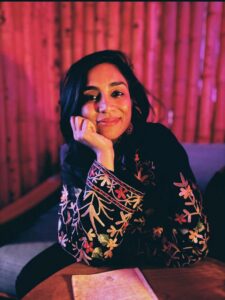
Dr. Sarah Waheed is Assistant Professor of History at the University of South Carolina and a historian of South Asia. She is a cultural historian who explores empire, nationalism, colonialism, Islam, gender, and memory, with a particular focus on Muslim communities across the India-Pakistan divide. She is the author of Hidden Histories of Pakistan: Censorship, Literature, and Secular Nationalism in Late Colonial India (Cambridge University Press, 2022) and was featured in venues such as the New Books Network. Her scholarship has appeared in several leading peer reviewed journals such as Modern Asian Studies and Asian Affairs, as well as featured in such globally leading publications as Critical Art Collective, Himal Southasian, The Caravan, Jadaliyya, and Maydan. Waheed’s second book, Chand Bibi: The Lives and Legends of a Warrior Queen, (Penguin Random House India, 2026) reconstructs the life and afterlives of the sixteenth-century Deccan queen Chand Bibi. Waheed has appeared on podcasts such as What’s Her Name to discuss how stories of women’s power, sovereignty, Islam, and political memory travel across time through history, legend, art, and popular imagination in South Asia and beyond.
 dia Studies, and modern Muslim intellectuals. Her recent book is titled, ‘Marital and Sexual Ethics in Islamic Law: Rethinking Temporary Marriage.’ As an associate professor at Agnes Scott College, she teaches classes in the Religious Studies department and also classes that are cross-listed with Women, Gender, and Sexuality Studies and Film Studies. When she is not working, she loves talking to her family and friends on the phone (thank you, unlimited plans), tracking fashion (sartorial flourishes are such fun), watching films (love! love! love!), reading novels (never enough), painting watercolors (less and less poorly), and cooking new dishes (sometimes successfully).