

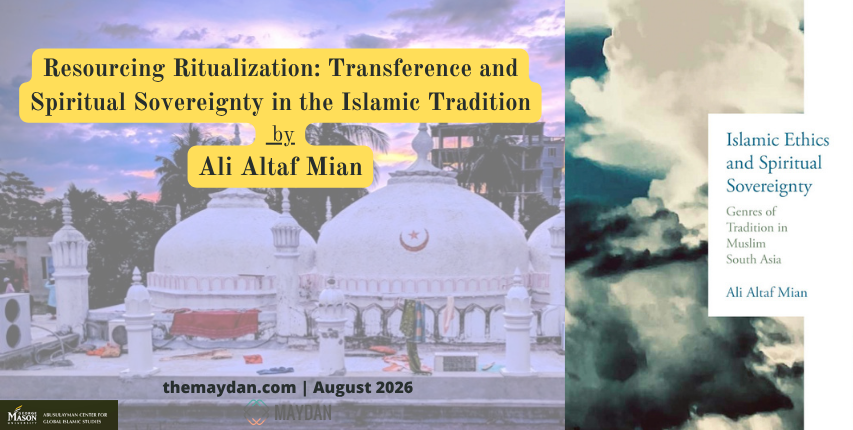
How is the practice of religious rituals already a political act and a movement of justice? What do bodies share between themselves as they learn and convey rituals and genres? Is this mode of teaching and transmission akin to a form of love called transference? How does transference ease identification with ethical exemplars? Do transference and identification make it easier to manage the self and modulate the spirit? What are the political implications of ethical struggle and spiritual sovereignty? These questions animate my book, but before I address them and tell you about my monograph, let me ground this essay in a concrete place and time.
Comilla in the Sufi Network of Maulana Ashraf ‘Ali Thanavi (1863-1943)
There is a neighborhood named Mughal Toli in a city called Cumilla (Comilla, in Bangladesh). Of historic significance, this city is nested in the verdant Lalmai-Mainamati hills and is located around 60 miles southeast of Dhaka and 90 miles northwest of Chittagong. From the fifteenth to the twentieth centuries, Cumilla was an important mercantilist node connecting the local Hindu Manikya kingdom to markets across the Persianate world. The Manikya kings successfully resisted incorporation into the Mughal Empire, and in the British period they wielded the partial sovereignty afforded to princely states.
The Mughal Toli neighborhood does not take its name from a formal Mughal affiliation; rather, it is named after Mughal Khan, a Muslim merchant from the north Indian city of Allahabad who settled there in the middle of the nineteenth century. Khan was a patron of religious scholars and Sufis and a financier of regional madrasas and mosques. The neighborhood’s name and, more importantly, an outsider’s financing of traditional Muslim forms of life in a Hindu princely state attest to the possibilities of pluralism before the partition of South Asia into India and Pakistan in 1947.

Religious pluralism still exists in the subcontinent, but it cannot be denied that sharing the world today has become more difficult than ever before due to rising religious nationalism and the generalization of genocidal violence and planetary destruction. Of course, the invocation of confessional or clan-based identity in statist formations of sovereignty is something neither modern nor necessarily menacing. Yet, in colonial India, as elsewhere in Asian and African geographies under European colonialism, religious and ethnic differences were instrumentalized within a political matrix whose logics of law, procedures of power, and schemes of socialization were premised to serve capitalist greed. To that end, this political matrix projected a fantasy of sovereignty that privileged secularization and either opposed or attempted to co-opt ritualization. Consider how colonialists in British India did not abolish the canons of Islamic jurisprudence (fiqh) but co-opted fiqh to map the colonialist division of life into private religiosity and public rationality. Co-optation, in fact, is often the first tactic of colonial destruction of colonized forms of life. Those who turn to religious discourses and rituals to find legitimacy for capitalism and secularization might of course find some exploitable material therein. Yet, as Talal Asad showcases, religious traditions also hold out manifold possibilities for thinking and doing otherwise, for displacing and disrupting, if not always supplanting, the logics, procedures, and schemes of the capitalist international order. Put otherwise, why not explore religious traditions’ resources for pursuing justice? Justice, to remind myself and my readers, always involves respecting, always and in all imaginable ways possible, human differences (and the singularity of human dispositions). These possibilities of justice beckon insiders, outsiders, and those in-between to explore minute ways, which should not be confused with triviality, to transform themselves and their worlds within the framework of the religious tradition.
Put otherwise, why not explore religious traditions’ resources for pursuing justice? Justice, to remind myself and my readers, always involves respecting, always and in all imaginable ways possible, human differences (and the singularity of human dispositions). These possibilities of justice beckon insiders, outsiders, and those in-between to explore minute ways, which should not be confused with triviality, to transform themselves and their worlds within the framework of the religious tradition.
Ritualization, in other words, might still serve as a resource as we struggle with the strangleholds of secularization, global capitalism, and neocolonialism (and their attendant modes of affective investment and divestment). I thus find myself compelled to critically explore the alternative political imagination in religious traditions’ forms of life (e.g., rituals) and forms of language (e.g., genres). I believe we risk losing the shareability of the world if we discard and disavow the justice-seeking movement between rituals and genres in the life of tradition. This is the wager of my recent book, Islamic Ethics and Spiritual Sovereignty: Genres of Tradition in Muslim South Asia.
Maulana Thanavi’s Poetics and Practices of Ritualization
I began with Cumilla and the neighborhood named after Mughal Khan because this city, thanks to Khan’s descendants, became one of the easternmost nodes in the Sufi network of Maulana Ashraf ‘Ali Thanavi (1863-1943). Maulana Thanavi’s poetics and practices of ritualization form the substance of my critical thinking about the facticity and future of the Islamic tradition in the face of secularization.
I began with Cumilla and the neighborhood named after Mughal Khan because this city, thanks to Khan’s descendants, became one of the easternmost nodes in the Sufi network of Maulana Ashraf ‘Ali Thanavi (1863-1943). Maulana Thanavi’s poetics and practices of ritualization form the substance of my critical thinking about the facticity and future of the Islamic tradition in the face of secularization.
He is arguably the most renowned Sunni theologian and Sufi mentor of modern South Asia and the community of scholars and Sufis he trained exemplifies a nimble engagement with genre and ritual, discourse and embodiment. This community’s struggles anchored many colonial-era South Asian Muslims—and continue to anchor many contemporary Muslims in both South Asia and the South Asian diaspora—in Islamic patterns of aesthetic taste and ethical comportment (a taqwa-infused adab). Before addressing how the multi-genre literary activities and patient ethical struggles of Maulana Thanavi and his community afford us an opportunity to think about transference and spiritual sovereignty, let us briefly return to Cumilla and Mughal Khan. We do so to appreciate the trans-regional connectivity inherent in the Islamic tradition. The resources of ritualization in the Islamic tradition become realizable in many ways due to this tradition’s spatial connectivity and temporal dynamism. With spatial connectivity, the tradition opposes the ethnocentric territory-based divisions of the world. The same tradition opposes the secularist periodization of time and history by orienting worldly life to moral accountability in the afterlife. Thus, highlighting the multi-regional and multi-temporal dimension of tradition’s ethical struggles is not to conflate sociological efficacy with existential survival; rather, this critical-historical inquiry serves to bring into appearance the world-making resources of ritualization that secularization otherwise forecloses.
Mughal Khan was the maternal grandfather of Maulana Saghir Muhammad, a late nineteenth- and early twentieth-century religious scholar and Sufi master who was trained by Maulana Thanavi. Merchants like Mughal Khan and mystics like his grandson were embedded in a network of learning and transmitting the Islamic tradition, a network spanning central Asia and the Hijaz in Arabia. How so? Saghir Muhammad’s paternal grandfather, Nur Muhammad, hailed from Kabul, Afghanistan. He relocated to Balakot, a city in present-day Pakistan, at the command of his Sufi master, the early nineteenth-century Muslim mystic and mujahid Sayyid Ahmad of Raebareli (d. 1831). Nur Muhammad’s son, ‘Aziz Muhammad, pursued religious education under the directorship of his father and other ‘ulama in Kanpur, finally settling in Cumilla after a teaching stint in Calcutta. ‘Aziz Muhammad transmitted the tradition to lay Muslims in Cumilla and taught the canons of theology and law to hundreds of aspiring theologians and Sufis, including his own son, Saghir. This young man traveled from Cumilla to Kanpur to study with a range of scholars, including Maulana Thanavi. It was in fact Maulana Thanavi who encouraged Saghir Muhammad to visit the Hijaz for an apprenticeship with his own teacher in Qur’an recitation, Qari ‘Abdullah.
These scholars and Sufis, in both South Asia and the diaspora, are embedded in what Ebrahim Moosa calls “the Muslim Republic of Letters.” They study didactic ethical literatures in the Arabic and Persian languages, learning and transmitting the aesthetic sensibilities expressed in the lyrics of poets such as al-Mutanabbi and Omar Khayyam. South Asian ‘ulama are also steeped in theological texts, jurisprudential compendia, and mystical manuals—corpora that connect them to yet a richer constellation of luminaries, from the eighth-century Iraqi Muslim jurist Abu Hanifa to the thirteenth-century Andalusian mystic Ibn ‘Arabi. More recently in 2018, Cumilla surfaced in the global circuits of Islamic legal studies when an erudite scholar from that city, namely Mufti Hifzur Rahman al-Cumillayi, published a 23-volume biographical encyclopedia of Hanafi jurists. Thus, the institutional, discursive, and embodied life of this tradition indicates that in spite of the ever-present and increasing dangers of modern destructivity, many souls continue to cultivate a deep affective investment in the trope of persistence. In a sense, these souls have tied their life and death to patiently persevering in truth and finding salvation via the public persistence of religion (istiqama ‘ala al-haqq and baqa’-e din).
Training the individual and collective soul to embody, or at least respect, the divine norms is perhaps the most important objective pursued in the transmission of the Islamic tradition. The content of this transmission has never been reducible to the so-called “five pillars of Islam.” Nor does the transmission of tradition consist merely of transcribing texts and learning litanies. Rather, what the languages and logics of the Islamic tradition transmit from one generation to the next are “forms of life.” What does this phrase entail? In other words, what dynamics and dimensions of life does this phrase make available for understanding? The following words of philosopher Stanley Cavell are instructive here: “routes of interest and feeling, modes of response, senses of humor and of significance and of fulfillment, of what is outrageous, of what is similar to what else, what a rebuke, what forgiveness, of when an utterance is an assertion, when an appeal, when an explanation—all the whirl of organism [Ludwig] Wittgenstein calls ‘forms of life’.”
Forms of Life: Connecting Past, Present, and Future
The transmission of a religious tradition involves cultivating interest in alterity and learning how to invest oneself and one’s community in a present that is in touch with the past. This learning is not premised on the naïve belief that the past can be resurrected. Rather, learning a form of life tethered to the past fractures the self-sufficiency of the present; by acknowledging that roots still matter and mimetic routes to earlier ethical exemplars are still available for traversal. To transmit a tradition also concerns learning frameworks of feeling, such as the pain some believers feel for the wounds of the global Muslim community (umma). Values and affects—learning how and what to value via affective investments—are already embedded in a grammar, a sense of how to respond, when to laugh and when to weep, where and how to express rage and where and how to embody patience; a sense of the give and take of responsibilities and rights; a sense of the available genres by means of which we might articulate belonging, brokenness, and brokenheartedness. These senses of sense are neither isolated within nor already determined by history; rather, as anthropologist and philosopher Aaron Frederick Eldridge articulates eloquently, “a form of life is a dense articulation of crystallized temporalities, which are ultimately glimpsed in the dynamism that the stillness of form at once manifests and conceals.”
Life desires rest and repose even as it is always already entangled in movement and motion. Psychoanalyst Jacques Lacan conveys this pithily: “All that life is concerned with is seeking repose as much as possible while awaiting death.” To circle back to Cavell, we might say that “forms of life” surely concern the transmission of sensibilities and affects vis-à-vis grammar, but the knotting of life and language qua desire also concerns the demands of the drive and singularity. Thus, the inhuman dimension of subjectivity and sociality cannot be ignored in the study of religious traditions and their material modalities and immaterial itineraries of transmission. The key concept here is transference—the term psychoanalysis gives to the mysterious, sometimes mystical, bond in the therapeutic context that affords souls a passage, a possibility to traverse the fantasy of harmonious belonging. A similar psychic formation is encountered within the Sufi tradition, as an alchemical bond forms between a guide and a disciple, a bond that affords both, and the community writ large, to traverse the often-painful path of transcendence, the path treaded by the Prophet Muhammad in his perfect embodiment of humility before God. Sufi theorists teach us that the Prophet’s unparalleled spiritual sovereignty is proportionate to his nonpareil humility and spiritual servitude (faqr). Thus, there is something counterintuitive about spiritual sovereignty: the spirit (ruh) wields a modicum of sovereignty only via the humbling training of the soul (tarbiyyat al-nafs) and self-annihilating ethical struggle (mujahadat al-nafs).
The key concept here is transference—the term psychoanalysis gives to the mysterious, sometimes mystical, bond in the therapeutic context that affords souls a passage, a possibility to traverse the fantasy of harmonious belonging. A similar psychic formation is encountered within the Sufi tradition, as an alchemical bond forms between a guide and a disciple, a bond that affords both, and the community writ large, to traverse the often-painful path of transcendence, the path treaded by the Prophet Muhammad in his perfect embodiment of humility before God.
The concept of sovereignty has energized the historical, anthropological, and textual study of Islam in the last fifteen years, from Azfar Moin’s Millennial Sovereign to SherAli Tareen’s Defending Muḥammad in Modernity to Shenila Khoja-Moolji’s Sovereign Attachments and Maya Mikdashi’s Sextarianism to Wilson Chacko Jacob’s For God or Empire. These books demonstrate the analytical purchase of engaging with wider philosophical discourses and bring into focus several competing concepts of sovereignty across disciplinary domains: immanent accounts of its transformation from monarchical to popular (global history); conservative and radical critiques of liberalism authorized by Carl Schmitt’s juridical model of sovereignty (political theology); the diagnosis of sovereignty as cruelty and masculinist fantasy (psychoanalytic thought); and, genealogical investigations of sovereignty’s entanglements in modern biopower (Foucault).
This interest in sovereignty has also spurred a deepening of the concept’s archival retrieval and institutional analysis among historians of Islam. Let me mention two recent studies as illustrations. Paul Heck’s Political Theology and Islam proposes that political consciousness and world-making activism in the Islamic tradition cannot be collapsed into statecraft. In the Islamic past, rulers exercised the authority to determine the social contour of good and evil, but so did moral communities, consisting of jurists, preachers, theologians, Sufi masters, and lay Muslims. Of course, their activities sometimes furnished rulers with the symbolic system needed to stabilize the Islamic imperium, yet many moral actors maintained an “engaged distance” from state policies and politics. Heck therefore speaks of two folds of sovereignty without endorsing the separation of the political and religious domains, contrasting the state’s mechanisms of rule to the moral community’s “heavenly devotions.” In his study of the trans-regional Mujaddadi Sufi fellowship, The Hidden Caliphate, Waleed Ziad destabilizes nationalist historiographies, narratives of the Great Game, and colonialist classifications that position heterodox Sufis against orthodox jurists. Foregrounding the concept of “the hidden caliphate” (batini khilafat) as a catalyst for doing institutional history otherwise, Ziad perceptively describes how the mystical heirs of the seventeenth-century Naqshbandi Sufi saint Ahmad Sirhindi have maintained a parallel network of sovereignty from north India to Central Asia and beyond.
Displacing Political Sovereignty
Islamic Ethics and Spiritual Sovereignty seeks to understand how the concepts and practices of spiritual sovereignty displace political sovereignty. The movements of ritualization between forms of language and forms of life introduce into tradition the soul’s humble and humbling grappling with sovereignty. This is where the concept of genre enters the picture, and with it the question and demands of justice, for genre is a tantalizing concept in terms of sovereignty, invoking the making and unmaking of borders between forms. The porous nature of genre-based borders makes tradition a site of textuality (with play and ambivalence in tow), as do the shifting valences of genre, between literary form, body of knowledge, world-making spaces, and scenes of interpellation. I show how Maulana Thanavi’s writings traverse genres in various valences, a traversal that places him in multiple contexts of discourse and embodiment. The act of doing scriptural exegesis makes him a mufassir, the writing of fatwas gives us the picture of a mufti, the authoring of books and treatises posits him as a musannif, his correspondence with disciples conveys the idea of a muhaqqiq, and his sermons portray him as a wa‘iz. What might be the ontological implication of inhabiting these shifting generic and ritual personae?
Maulana Thanavi and his Sufi successors, such as the aforementioned Maulana Saghir Muhammad and his spiritual brothers profiled in the book, practice a form of textuality I call “the trans-genre movement of tradition.” This movement is only possible because the venerated custodians of the tradition uphold borders within and across literary forms and institutional spaces.
The traversal implied in textual movement negates the fixity of identity. This traversal happens not only through writing in the formal sense but in practices rooted in ritualization that afford the becoming real of embodied textuality. Maulana Thanavi and his Sufi successors, such as the aforementioned Maulana Saghir Muhammad and his spiritual brothers profiled in the book, practice a form of textuality I call “the trans-genre movement of tradition.” This movement is only possible because the venerated custodians of the tradition uphold borders within and across literary forms and institutional spaces. However, they do so often for the sake of mixing genres and moving between genres. The border, then, becomes a threshold of traversal, a space for play and the production of pleasure within the limits and laws of genre. I theorize this trans-genre dynamic as a pursuit of justice because this movement within and across forms is instigated by the felt and perceived needs and demands of the bodies that populate the tradition. Thus, respecting and making room for singularity becomes the principle of tradition’s practice and perseverance. Tradition, then, appears as the justice-seeking learning and desiring of forms of life and forms of language becoming real at the threshold of embodied textuality (an orientation to tradition that is developed in the book’s first three chapters).
The path of self-transformation treaded by Sufi guides and their disciples is a path that starts with struggle and trust, with a seeking, a yearning that transforms activity into passivity at the advent of divine grace. The inflow of grace oscillates between feelings of contraction and expansion, known in the Sufi tradition as qabd and bast, but both affective formations are forms of love. While this love can form without human struggle and effort, it usually becomes transformative within the pedagogical crucible of tarbiyya and mujahada. Sufi mentors, therefore, often become the center of their disciples’ attachment and identification. This love then proceeds further as it engenders a movement of losing oneself in imaginal fields known as the Muhammadan Reality and the Divine Presence. This experience of transference is life-transforming and restructures the ethical subject’s axiological networks. Let me supply an illustration to drive home the point that this is not a matter of mystical speculation, but a reality experienced by wayfarers of the divine path.
Sayyid Shakir ‘Ali was a Muslim in colonial India whose form of life was colored and conditioned by both a free-spirited disposition and an English education. His taste and temperament reflected not the survival of the Islamic tradition but the success of European colonialism. And then something unsaid happened around 1922 that compelled him to start pursuing the Sufi path under Maulana Thanavi’s tutelage. The latter’s tarbiyya combined with Shakir ‘Ali’s mujahada brought forth a vivid transformation: the same body that used to wear tailored suits now donned simple kurtas, his shaved face became a bearded countenance, his hands empty no more but now held a string of beads to recite the divine names. This total transformation of his outside indicated that the coordinates of the inside had shifted. The power of transference manifests in hearts and then appears on the body and via behavior. We should note that these personal transformations are not private affairs. Transference taps into singularity to transform a subject’s participation in social economies and political ecologies. Thus, Shakir ‘Ali’s ways of relating to people changed. He wrote letters of apology to those abused by his tongue and sent payments to those cheated by his dealings. His transformation was contagious and people wanted to know the why? and the how come? of this sudden change of character.
Maulana Thanavi was impressed and granted Shakir ‘Ali permission to tutor lay Muslims in the basics of religion. The Sufi master did not grant him the authorization to train disciples given that Maulana Thanavi practiced extreme caution in the field of Sufi succession (khilafat), and often restricted authorization (ijazat) to madrasa-trained scholars. After the Partition, Shakir ‘Ali migrated to Karachi, where he practiced homeopathic medicine. He embodied, and encouraged others to learn, the life and language of Islamic rituals. He passed away in 1975. The story of his transformation exemplifies that singularity is not negated but repurposed in and through transference (and in fact transference is not possible without singularity).
I have highlighted here the stories of Maulana Saghir Muhammad and Sayyid Shakir ‘Ali because they are two disciples of Maulana Thanavi whose profiles did not make it into the book. The Sufi successors whose stories the book discusses as examples of transference and spiritual sovereignty are the Hadith scholar Maulana ‘Abdur-Rahman Kamilpuri (d. 1965), the mystical theologian Shah Wasiullah of Allahabad (d. 1967), and the poet Khavaja ‘Aziz-ul-Hasan Ghauri (d. 1944).
I have highlighted here the stories of Maulana Saghir Muhammad and Sayyid Shakir ‘Ali because they are two disciples of Maulana Thanavi whose profiles did not make it into the book. The Sufi successors whose stories the book discusses as examples of transference and spiritual sovereignty are the Hadith scholar Maulana ‘Abdur-Rahman Kamilpuri (d. 1965), the mystical theologian Shah Wasiullah of Allahabad (d. 1967), and the poet Khavaja ‘Aziz-ul-Hasan Ghauri (d. 1944). The trajectories of their lives flesh out what it means to inhabit the genres of tradition as genres of desire, to participate in its dynamic textuality, which is to practice a movement that attends to the deontological divine norms while also considering the ontological demands of singularity. The struggle involved in the path and the tutelage received from guides and mentors pave the way for experiences of grace, which we need now more than ever as we face our brokenness amidst planetary destruction, genocidal violence, and renewed resistance to sharing and caring for the world.
Now is not the time to disavow ritualization and its trans-genre movements that seek justice. Rather, now is the time to avow ritualization’s singularity-affirming knotting of life and language against the knotty and divisive logics, procedures, and schemes of secularization. Let us always give an unqualified yes to sharing the world and to caring for each other. Flip over this plea and you get another one: let us always say an absolute no to capitalist greed and the territorialist machinations of ethnocentric supremacy.
Ali Altaf Mian is the Izzat Hasan Sheikh Fellow in Islamic Studies and Assistant Professor of Religion at the University of Florida. He is the author of Islamic Ethics and Spiritual Sovereignty: Genres of Tradition in Muslim South Asia (Notre Dame Press, 2026) and Muslims in South Asia (Edinburgh University Press, forthcoming in 2029) and the editor of The Bruce B. Lawrence Reader: Islam Beyond Borders (Duke University Press, 2021). His research has appeared in numerous journals, including History of Religions, Qui Parle, Journal of Islamic Studies, Der Islam, Journal of Urdu Studies, ReOrient, International Journal of Islam in Asia, and Comparative Studies of South Asia, Africa, and the Middle East.